
10 Mistakes Real Estate Agencies Make With Their Online Presence
Most real estate agencies are invisible online — not because the market is too competitive, but because they keep making the same avoidable mistakes.
Real estate is one of the most competitive industries in the world, yet most agencies make their situation significantly harder than it needs to be through entirely avoidable web strategy mistakes. These aren't obscure, technical errors. They're fundamental problems with websites, branding, photography, and strategy that any agency can fix — but most never do because no one has pointed them out clearly. Consider this your honest, direct assessment.

10 Mistakes Real Estate Agencies Make With Their Online Presence
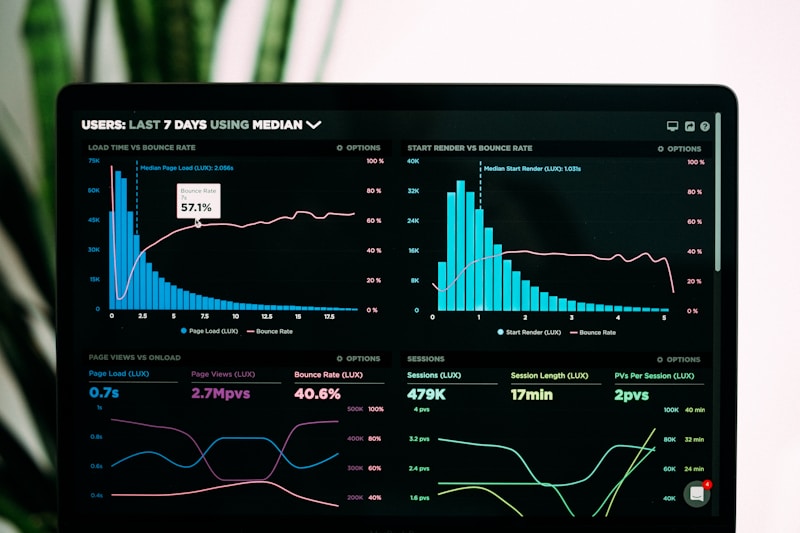
The first and most damaging mistake is a slow website. In a market where first impressions happen online, a site that takes more than three seconds to load is actively losing you clients. Buyers click away. Google penalises slow sites with lower rankings. And in the luxury segment, a sluggish website signals incompetence — if you can't maintain a fast website, why would a client trust you with a multi-million-dollar transaction? Website speed isn't a technical detail. It's a business-critical asset.
Most real estate agencies are invisible online — not because the market is too competitive, but because they keep making the same avoidable mistakes.
Poor property photography is the second most common mistake, and arguably the most expensive. Smartphone photos of dark, cluttered rooms communicate exactly the opposite of what you want buyers to feel. They signal low standards, rushed marketing, and disrespect for the property and the seller. Professional photography pays for itself many times over through faster sales and higher offers. There's simply no excuse for poor property photos in 2026.
- real estate web solutions
- real estate branding
- realtor online presence
Weak branding is the mistake that's hardest to see from the inside. When you look at your own agency's branding every day, it's difficult to assess it objectively. But buyers and sellers are forming snap judgements about your professionalism, your market positioning, and your competence based on your logo, your colour palette, your typography, and the visual consistency of everything you produce. Generic, inconsistent, or outdated branding silently costs you listings to competitors who've invested in looking the part.
Having no social media strategy means relying entirely on paid advertising and referrals — both of which stop the moment you stop paying or a referral source moves on. Social media builds a compounding asset. Every reel and carousel you publish continues to surface to new local buyers for weeks. Agencies with a strong social presence receive consistent, high-intent leads from Instagram, TikTok, and Facebook without any ongoing ad spend. Agencies without it are stuck on a hamster wheel of paid acquisition.
A bad mobile experience is inexcusable in 2026. Over 70% of property searches start on a mobile device. If your website isn't perfectly optimised for phones — with fast load times, properly sized images, intuitive navigation, and readable text — you're delivering a poor experience to the majority of your potential clients. Too many agencies have beautiful desktop websites that are completely unusable on a phone.
Relying on generic templates is a subtle but significant mistake. Template websites are built for the average business. Your agency isn't average — or at least, it shouldn't be. A generic template communicates that you're one of many, not one of the best. Especially in the luxury market, your website should feel as premium as the properties you represent. Custom design is an investment in differentiation that pays dividends across every client interaction.
Weak calls to action leave money on the table every single day. If a buyer visits your website and can't immediately find a clear, compelling reason to get in touch — a free valuation, a market report, a consultation — they'll leave without converting. Every page of your website should have a purpose, and that purpose should be to move the visitor one step closer to becoming a client. Unclear, buried, or non-existent calls to action are silent lead killers.
A poorly set up lead generation system means your website is a brochure rather than a business asset. A brochure gives information and then lets people leave. A lead generation machine captures contact details, triggers follow-up sequences, and ensures no potential client falls through the cracks. Without a CRM integration, a lead capture strategy, and an automated follow-up system, you're leaving a significant percentage of your website traffic unconverted.
The final mistake is treating your web presence as an afterthought rather than a strategic priority. The agencies that dominate their markets in 2026 are those that understood years ago that their digital presence is their most important business development tool. They invested in great websites, professional photography, video content, and SEO. They're now reaping the compounding rewards of those early decisions. The best time to start was five years ago. The second-best time is today.