

Commercial Real Estate Marketing: Photography & Videography Strategies for Office, Retail, and Industrial
Commercial and residential real estate marketing are not the same thing. A completely different set of photography, videography, and content strategies applies to office, retail, industrial, and mixed-use commercial assets.
Commercial real estate marketing is a fundamentally different discipline from residential marketing. Residential marketing speaks to emotions, lifestyle, and aspirations — the dream of raising a family in a warm home. Commercial marketing speaks to investors, tenants, and business decision makers with calculations, return on investment, yield, and the practical realities of how a space will support business operations. Imagery that works beautifully for a residential listing can be completely ineffective for a commercial property.

Commercial Real Estate Marketing: Photography & Videography Strategies for Office, Retail, and Industrial
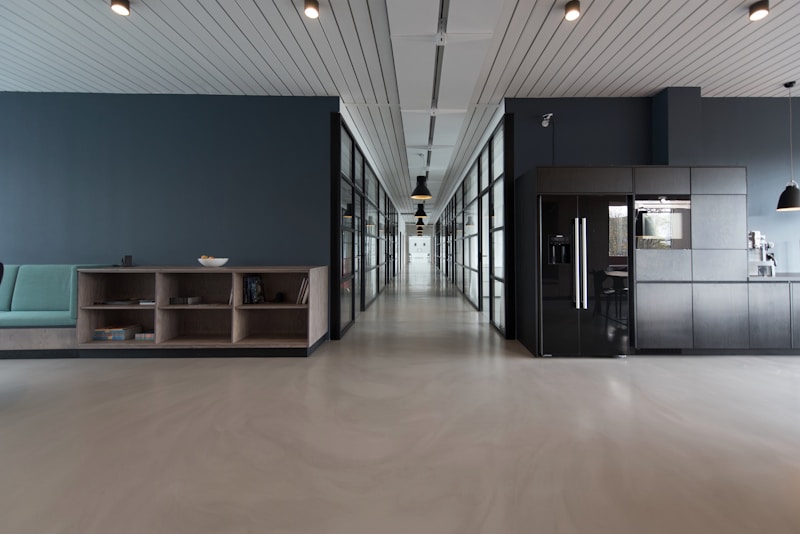
Office space marketing imagery has two goals: demonstrate the quality and flexibility of the physical floorplate, and sell the human experience of working in the building. Photography should show wide shots of open-plan layouts with clear verticals and unobstructed sightlines so a tenant can mentally lay out their workstations, meeting rooms, and private offices. It should also show lifestyle shots — the rooftop terrace, the end-of-trip facilities, the lobby seating, the café downstairs, the quality of the natural light — because modern office tenants choose buildings as much on amenity and staff experience as on square meter rent.
Commercial and residential real estate marketing are not the same thing. A completely different set of photography, videography, and content strategies applies to office, retail, industrial, and mixed-use commercial assets.
Retail property marketing imagery needs to be approached with footfall, frontage, and signage in mind. External photography should be shot at the busiest time of day, on the busiest day of the week, ideally with the surrounding retail strip visibly active and populated. Window lines, entrance visibility, signage opportunities, and loading access should all be photographed specifically. Internal retail shots need to communicate clear span, ceiling height, services runs, and storage potential. A restaurant tenant looking at an empty shell cares about very different photographic details than a fashion boutique does.
- commercial real estate photography
- office marketing videography
- industrial property marketing
- retail space leasing media
Industrial and warehouse property marketing photography rewards extreme clarity and documentation. Good industrial photography covers every critical operational detail: warehouse clear span height, roller door sizes and quantity, truck turning circles and hardstand areas, office mezzanine and reception areas, racking if applicable, three-phase power access, fire safety systems, car parking ratios, and external container storage yards. The images should read almost like a technical spec sheet a tenant or investor can review without reading the marketing copy. Industrial buyers and tenants are practical decision makers; glamour shots usually waste space and credibility.
Commercial videography requires a completely different structural approach to residential property films. A residential property film builds an emotional arc. A commercial property film demonstrates scale, specification, and function efficiently. The typical structure runs: an opening drone establishing shot of the building and surrounding business precinct, a walk through entry and common areas, floorplate and interior footage, detailed highlights of specific features (end-of-trip, rooftop, loading dock, racking), and a closing summary shot with a branded overlay. Narrated commercial films with a professional voiceover reading the key property specifications consistently outperform silent music-only versions for serious tenant leads.
The missing piece of commercial marketing in most markets is floor plans and site plans. Rough hand-drawn PDF plans with inconsistent dimensions cost commercial leasing agents more tenant leads than any other single marketing deficiency. A set of clean, dimensioned, architect-drafted floor plans paired with 3D massing renders of buildings on a block, or full Matterport scans of warehouse interiors, reduce the number of wasted physical inspections by a factor of roughly three, according to most commercial agencies who have measured the metric. Tenants and investors appreciate being able to size up a property accurately from a listing before committing time to a site tour.
Commercial real estate marketing done correctly is a compounding asset for an agency rather than a one-off listing expense. High-quality, properly-captioned photography and videography for every listing builds a reusable portfolio of case studies that an agency can use to pitch new commercial clients for years. An agency that can show a prospective industrial landlord thirty beautifully documented previous warehouse listings they have leased will win that pitch against a competing agency with a generic deck every single time.